Classification of cerebral palsy types
The types of cerebral palsy are classified by which areas of the brain were injured and how that damage affects movement and muscle control. These classifications help explain why some children have mild limitations, but severe cerebral palsy can mean lifelong disabilities.
Detecting movement issues in children early on is crucial, even if they seem minor at first. This is because cerebral palsy is a lifelong condition that usually requires special care.
There’s no cure for CP, but early treatment can make a meaningful difference in a child’s mobility and quality of life.
If your child has cerebral palsy, you may be wondering what caused it. Our labor and delivery nurses are here to listen to your story and answer your questions. If negligence may have played a role, a top CP lawyer in our network may be able to help.
Our legal partners have secured over $1 billion for families, and they may be able to recover money for you, too. Get a free legal consultation right now — there’s no cost or obligation.
What are the different types of cerebral palsy?
There are 5 major types of cerebral palsy: spastic, athetoid (dyskinetic), ataxic, hypotonic, and mixed cerebral palsy.
Learning the different cerebral palsy types can help parents and caregivers better understand their child's condition. This can be especially helpful for managing CP symptoms and providing the best possible care.
The chart below shows how common each type is.
Spastic cerebral palsy
Spastic CP is the most common form, accounting for about 77% of cases. It causes high muscle tone that leads to stiff muscles and jerky, exaggerated movements, known as spasticity.
This type of CP results from brain damage that affects movement and muscle control, sometimes on one side of the body and sometimes throughout the body.
Spastic quadriplegic cerebral palsy is the most severe form of spastic CP. It affects both arms and both legs and often requires lifelong medical care and daily support.
Common symptoms of spastic cerebral palsy include:
- Contractures (permanently tightened muscles or joints)
- Difficulty crawling or walking
- Exaggerated reflexes
- Stiff muscles in one or more parts of the body
In more severe cases, spastic cerebral palsy can lead to lifelong medical care, therapy, adaptive equipment, and significant ongoing expenses.
If you suspect your child’s CP was caused by a mistake during childbirth, we may be able to help you seek financial aid to cover the costs of lifelong care.

Athetoid (dyskinetic) cerebral palsy
Athetoid cerebral palsy, also called dyskinetic cerebral palsy, affects about 2.6% of children with CP. It causes involuntary movements that can impact the face, torso, arms, and legs.
This type of CP includes choreoathetoid and dystonic forms and is marked by fluctuating muscle tone. Muscles may alternate between being too loose and too stiff, making movement difficult to control.
Athetoid cerebral palsy is caused by damage to parts of the brain that regulate movement, balance, and coordination. Because these movements are involuntary, everyday tasks such as eating, sitting upright, and speaking can be especially challenging.
Common symptoms of athetoid cerebral palsy include:
- Feeding issues
- Floppiness in the limbs
- Posture challenges
- Stiff or rigid body
In moderate to severe cases, athetoid cerebral palsy can require lifelong therapy, adaptive equipment, and daily assistance.
Ataxic cerebral palsy
Ataxic cerebral palsy makes up about 2.4% of all cases of cerebral palsy. It causes issues with balance, coordination, and involuntary movement (ataxia).
This type of CP is caused by damage to the cerebellum, the part of the brain responsible for coordination and balance. As a result, movements may appear unsteady, and muscle tone is often reduced.
Common symptoms of ataxic cerebral palsy include:
- Poor coordination
- Problems with depth perception
- Shakiness and tremors
- Speech difficulties
- Spreading feet apart when walking
In more severe cases, ataxic cerebral palsy can interfere with daily activities and may require ongoing therapy and support.
Talk with one of our nurses for free if you have questions about types and levels of cerebral palsy.
"We each have over 20 years of experience in the field, and we’re here to listen to your story. If you need support, we can help you get the assistance you need."
— Kristin Proctor, RNC-OB, Cerebral Palsy Guide on-staff registered nurse


Hypotonic cerebral palsy
Hypotonic cerebral palsy (also known as atonic cerebral palsy) makes up about 2.6% of all cases. This cerebral palsy type is classified by low muscle tone that causes loss of strength and firmness, resulting in floppy muscles.
Common symptoms of hypotonic cerebral palsy include:
- Flexible joints and ligaments
- Lack of head control
- Loose muscles
- Poor balance and stability
Instability and floppiness in muscles can cause a child to miss developmental milestones such as crawling, standing, or walking.
Mixed type cerebral palsy
In some cases, damage to the developing brain is not confined to one location. When that happens, a child can develop more than one of the types of cerebral palsy, which is called mixed type cerebral palsy.
Mixed type cerebral palsy occurs when a child shows symptoms of 2 or more types of cerebral palsy. About 15.4% of all cases are diagnosed as mixed type cerebral palsy.
"Some people have symptoms of more than one type of CP. The most common type of mixed CP is spastic-dyskinetic CP," the Centers for Disease Control and Prevention (CDC) reports.
Watch our short video to learn more about the 5 types of cerebral palsy.
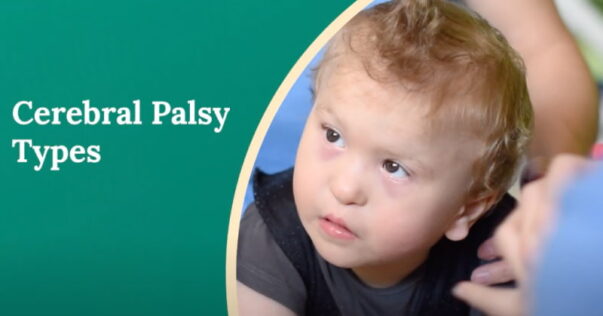
Learn about the five types of cerebral palsy. Knowing what type of CP your child has can help ensure they get the right treatment.
Duration: 1 min 46 sec
Cerebral palsy is a neurological disorder that affects movement and posture. It is caused by damage to the developing brain, usually before or during birth. There are several different types of cerebral palsy, and each one is classified based on the mobility limitations and affected body parts.
The type of cerebral palsy corresponds to the location of the brain damage. The five types of cerebral palsy are spastic cerebral palsy, ataxic cerebral palsy, athetoid cerebral palsy, hypotonic cerebral palsy, and mixed cerebral palsy.
Spastic cerebral palsy is the most common type, and it is characterized by stiff and jerky movements. It can affect one or both sides of the body and ranges from mild to severe.
Ataxic cerebral palsy affects balance and coordination, and it can result in shaky movements and difficulty with fine motor skills.
Athetoid cerebral palsy is characterized by involuntary movements, such as twisting and writhing motions. It can also cause difficulty with speech and swallowing.
Hypotonic cerebral palsy results in low muscle tone and can make it difficult for children to sit up or control their head movements.
Mixed cerebral palsy is a combination of two or more types of cerebral palsy, and it can affect different parts of the body in different ways.
It is important to understand the different types of cerebral palsy to ensure your child receives the appropriate treatment. The team at Cerebral Palsy Guide can provide you with more information on the treatments available for each type as well as financial support options.
Contact us today to get the help your family needs.
Types of CP by body part affected
The types of cerebral palsy can be further classified based on which parts of the body are affected. CP is a group of movement disorders, and the extent of movement problems is related to the location of the brain injury.
Types of cerebral palsy classified by the affected body parts are:
- Monoplegia is a rare type of movement problem that occurs when only 1 arm or leg is affected.
 Monoplegia
 - Diplegia affects 2 of the same limbs, most commonly the legs. Children with spastic diplegia may also have mild movement issues in the upper body. In many cases, diplegia is caused by premature birth that results in cerebral palsy.Diplegia
- Hemiplegia affects one entire side of the body. The arm is generally more affected than the leg and is distinguished by a rigidly flexed wrist or elbow. Prenatal brain bleeding can lead to spastic hemiplegia.Hemiplegia
- Triplegia occurs when 3 limbs are affected. An example is when both legs and one arm cannot move freely.Triplegia
- Quadriplegia occurs when all 4 limbs are affected. The legs are generally impacted more than the arms. The muscle tone of the trunk can also be affected. Quadriplegia may cause limited control over facial muscles, affecting talking, eating, and swallowing.Quadriplegia
- Double hemiplegia occurs when all 4 limbs are affected, with one side more so than the other.Double hemiplegia




Using this additional classification can help differentiate between cerebral palsy types. For example, a CP diagnosis may be “spastic diplegia” or “spastic hemiplegia cerebral palsy.”
If you have questions about which of the types of cerebral palsy your child may have, our comprehensive guide can help.
Download our FREE Cerebral Palsy Guide right now.
Gross motor function classification system (GMFCS)
The Gross Motor Function Classification System (GMFCS) is a tool used to classify gross motor function and is often used to describe cerebral palsy severity levels.
The tool helps categorize 5 levels of cerebral palsy to provide a better understanding of a child’s overall motor function. This scale looks at gross motor abilities (skills that require whole-body movement in order to complete daily tasks).
When analyzing a child’s gross motor function, medical professionals look at the abilities the child can usually perform at home or in the community, not the skills they sometimes perform when functioning at their best.
Doctors use the GMFCS scale to describe the different levels of cerebral palsy and how the condition affects movement.
| Level I | Able to walk without limitations; by age two, they can sit independently, and by age six, they can navigate curbs and stairs without railings. |
| Level II | Can walk with some limitations; might use handheld mobility devices or wheelchairs for longer distances. |
| Level III | Primarily walks with handheld mobility devices indoors but uses wheelchairs for community travel and longer distances. |
| Level IV | Limited self-mobility; primarily uses manual or powered wheelchairs, with possible short-distance walking with assistance. |
| Level V | Severe movement limitations; requires power wheelchair for mobility and complete assistance for most activities. |
Specialists will examine a child's gross motor skills (such as sitting and walking) to determine their GMFCS level to accurately diagnose the cerebral palsy type.
It can also help determine which mobility aids may be necessary to assist with movement in each of the types of cerebral palsy.
According to the advocacy group Cerebral Palsy Alliance, a child over 5 years of age who ranks at Level IV (extreme motor function impairment) will generally not improve their level and will more than likely use a mobility device throughout their life.
Get legal help for any type of cerebral palsy
If your child is affected by any of the cerebral palsy types, getting the proper support is a top priority. While the symptoms vary between the types of cerebral palsy, they often bring more challenges than families are prepared for.
If you think a mistake during birth caused your child's cerebral palsy, it's important to get help. Talking to an experienced lawyer can help you understand your rights and figure out what to do next.
Cerebral Palsy Guide partners with top birth injury lawyers who can help families in all 50 states. They’ve recovered over $1 billion for families affected by preventable birth injuries, including all CP types.
Call our trained patient advocates at (855) 220-1101 or get a free case review right now to find out if we can help.